6G – New Smarter, Faster and Better Wireless Network Architecture
Wireless communication has quietly become one of the most critical foundations of everyday life. Much like electricity or water, connectivity now underpins how economies function, how societies interact, and how digital services scale. From early analog voice systems to today’s high-speed 5G networks, each generation of mobile technology has pushed those foundations further. Now, attention is turning to the next evolution: 6G. More than just a faster version of 5G, 6G represents a fundamental shift in how networks are designed, operated, and experienced.

Beyond Speed: What Makes 6G Different?
At first glance, the headline numbers are striking. 6G is expected to deliver peak data rates approaching one terabit per second, with latency so low it feels almost instantaneous. These capabilities open the door to real-time applications that simply aren’t possible today, like immersive extended reality, ultra-responsive remote control systems, and new forms of machine-to-machine interaction.
But raw performance is only part of the story. The real transformation lies in how intelligence is embedded throughout the network. Unlike previous generations, where intelligence largely sat at higher layers, 6G is being designed with AI and ML woven into its core.
Blurring the Physical and Digital Worlds
Ubiquitous intelligence is a defining principle of 6G architecture. AI and ML will support functions such as adaptive beamforming, predictive resource allocation, and intelligent energy management.
By continuously analyzing network conditions and usage patterns, 6G systems can optimize performance while reducing unnecessary power consumption. The result is not only a better user experience, but also lower operational inefficiency - an increasingly important factor as data traffic continues to grow.
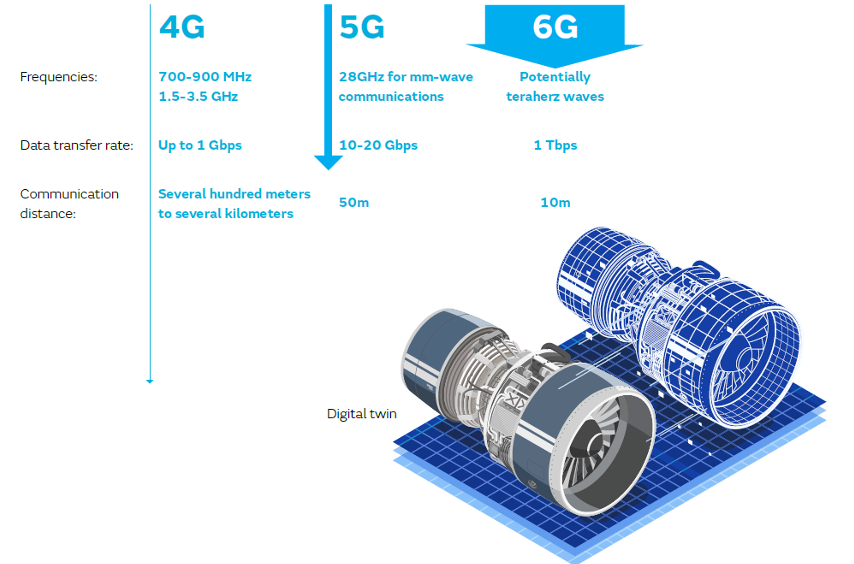
These models can be used to simulate scenarios, optimize processes, and support rapid decision-making across areas such as infrastructure management, disaster response, and industrial operations.
Expanding Connectivity with Hybrid Networks
While urban environments are set to benefit from higher speeds and lower latency, 6G also addresses long-standing challenges in rural and remote connectivity. This is achieved through hybrid network architectures that combine terrestrial infrastructure with non-terrestrial elements, including very low Earth orbit (VLEO) satellites.
Operating much closer to Earth than traditional geostationary (GEO) satellites, VLEO systems significantly reduce latency and improve signal strength. When integrated with terrestrial networks, they enable seamless broadband coverage across wide geographic areas, improving resilience and redundancy where conventional infrastructure is difficult to deploy.
Pushing into New Spectrum
To achieve its ambitious performance targets, 6G is expected to expand further into higher-frequency spectrum. While 5G introduced millimeter-wave communication above 24 GHz, 6G research is exploring sub-terahertz frequencies beyond 100 GHz, potentially reaching up to 1 THz.
These frequencies offer enormous bandwidth, enabling data rates well beyond 100 Gbps. However, they also pose challenges, including increased signal attenuation, limited penetration, and line-of-sight requirements. Overcoming these constraints requires innovation in antenna design, beamforming techniques, and system integration.
Beamforming, Antennas, and Thermal Challenges
Advanced beamforming plays a central role in enabling high-frequency communication. By precisely controlling the phase and amplitude of signals across antenna arrays, radio energy can be directed toward specific receivers, improving link quality while reducing interference.
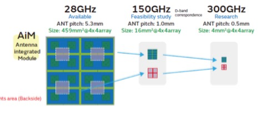
As antenna arrays become denser and frequencies increase, thermal management also becomes critical. Higher processing loads and compact designs generate more heat, which can degrade performance and reduce component lifespan if not carefully managed. For 6G systems, optimized thermal behavior and robust power management are essential design requirements, rather than optional extras.
Sustainability at the Core
Energy efficiency is no longer a secondary consideration. With global data traffic continuing to rise, 6G is being designed with sustainability as a core principle. Intelligent power management, AI-driven optimization, and energy-efficient hardware all contribute to lowering the environmental impact of network infrastructure.
Looking ahead, integrating renewable energy sources and developing ultra-low-power or zero-energy devices could help create networks that deliver exceptional performance while maintaining long-term environmental responsibility.
Enabling the 6G Transition
Murata has supported the telecommunications market through every major evolution, delivering a broad portfolio of essential components ranging from capacitors to advanced antenna technologies. As 5G infrastructure reaches maturity and global efforts accelerate toward the commercialization of 6G as early as 2030, Murata is well positioned to support this transition. With a strong focus on performance and sustainability, Murata is helping to lay the technological foundation for intelligent, resilient, and energy efficient networks, enabling 6G to move beyond connectivity and become a catalyst for innovation, societal progress, and a more connected digital future.